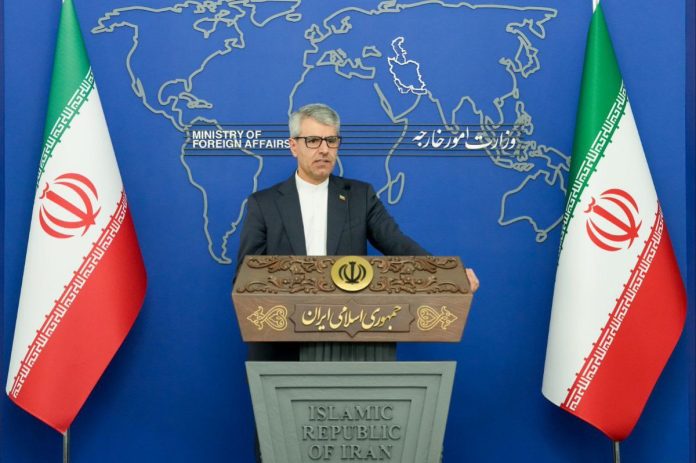


Iran Accuses U.S. of Enabling Israeli Actions, Demands End to Support for Ceasefire Violations
Tehran: Iran’s Foreign Ministry has called on the United States to stop supporting Israel, accusing Washington of bearing responsibility for what Tehran describes as repeated violations of the current ceasefire arrangements.
Speaking at a press briefing, Foreign Ministry spokesperson Ismail Baghaei said Iran had long been skeptical about the intentions of both the United States and Israel. He argued that recent developments had reinforced Tehran’s concerns and claimed that Israeli actions could not be separated from broader U.S. policies in the region.
Baghaei stated that Iran does not have disputes with neighboring countries but expressed disappointment toward states that, according to Tehran, allowed their territory to be used against Iranian interests.
The spokesperson also criticized Israel’s military operations in Gaza, alleging that Palestinian civilians continue to face severe humanitarian consequences. He further claimed that Iran had remained committed to ceasefire understandings while accusing Israel and the United States of failing to uphold their obligations.
Addressing the situation in Lebanon, Baghaei said Israeli military actions were continuing despite ceasefire efforts and stressed that Lebanon remains an important component of broader regional stability arrangements. He added that Tehran supports the implementation of ceasefire commitments across all fronts and would oppose any efforts to weaken existing agreements.
The Iranian official warned that Tehran would not remain silent if violations continued and said the country was prepared to respond to any threats against its security and interests.
Baghaei also criticized the head of the International Atomic Energy Agency (IAEA), Rafael Grossi, accusing him of overlooking key facts and adopting what Iran considers a biased approach toward the country’s nuclear program. He argued that such positions could affect confidence in international institutions.
Commenting on diplomatic contacts with Washington, the spokesperson said negotiations had been taking place in an atmosphere of deep mistrust. According to him, conflicting signals from the United States have complicated diplomatic efforts and may make future negotiations more difficult.
The remarks come as regional tensions remain high and international actors continue to encourage dialogue in an effort to prevent further escalation across the Middle East.